News story for Roots & Branches conference

FREMONT, Calif., August 5, 2026 — San Francisco Bay University is opening its annual faculty preparation institute to college and university faculty from across the Bay Area, encouraging regional participation in practical sessions about learning design, the application of artificial intelligence and relationship-building.

In its second year, the Roots and Branches Faculty Institute will be held Aug. 10-12, 2026, on the SFBU campus in Fremont. The SFBU Center for Empowerment and Pedagogical Innovation (CEPI) hosts the gathering, part of its mission to cultivate innovative, inclusive educational experiences through revolutionized faculty training.
 

Student and workforce needs are constantly changing, so it’s essential that we always assess and evolve our approaches to learning,” said Dr. Anzar Khaliq, the chief learning officer at SFBU and CEPI founding director. “In Roots and Branches, we have a hands-on studio that helps faculty plan for the academic year and craft timely curricular materials that keep them and their students far ahead of the curve. This is foundational to our work as a teaching-centric institution.
 

Launched in August 2024, CEPI keeps SFBU faculty up to date on teaching strategies and instructional practices amid developments in technology, research and student expectations. The center merges student-centered experiences, cultural sustainability, adaptive learning environments and AI-integrated teaching with Universal Design for Learning, a teaching framework that promotes equal opportunities for success.

The Roots and Branches institute applies those pillars across three days of in-person workshops. The first day will center on learning design, including how to equip students for carrying through a well-polished thought or idea to real-world execution.
 

On the second day, CEPI will explore AI-related changes in learning and welcome conversations with SFBU’s Excellence in AI Integrated Teaching Award winners. Activities will include discussion of individual AI practices and collaboration on AI tools for the coming academic year.

Finally, the institute’s third day turns to human connection in a technology-saturated context. As AI absorbs more of the production of student work, what happens between people becomes the most valuable thing a university offers, a shift now moving to the center of conversations across higher education.

"We'll dig into relationship mapping, the conditions that make learning possible and everything faculty built over the first two days," Dr. Khaliq said. "As AI takes on more of the production of work, the human parts of teaching grow in value: how we relate, how we build belonging, how we keep learning together. Relational intelligence is a serious intellectual pursuit and the leading edge of higher education, and this institute models it rather than lecturing about it."


SFBU compensates and provides certification to faculty for their participation in training, including the Roots & Branches institute. All full-time faculty members and around 75% of the visiting faculty members are expected to join the August event, which will run from 9 a.m. to about 2:45 p.m. each day.

Faculty at other Bay Area institutions may sign up, at no charge, by sending an email expressing interest to cepi@sfbu.edu. SFBU faculty should RSVP via calendar invite. 

Dr. Khaliq noted the institute is rooted in SFBU’s Personalized, Experiential, Relational, Student-Centered framework, known as PERS. The framework prioritizes mentorship; one-on-one student engagement with faculty; and practical engagement throughout the university experience. SFBU’s new MBA Pro+ program reflects those priorities in action.

We’re proud to provide Roots and Branches as an accessible resource for teaching and learning in Silicon Valley,” Dr. Khaliq said. “Redesigning education for the AI era demands collaboration, and we all need to keep learning from one another.


About San Francisco Bay University

San Francisco Bay University creates accessible learning opportunities that prepare diverse undergraduates and graduate students for lifelong personal and professional success. Through high-quality, career-focused programs in psychology, business, computer science and engineering, SFBU is building an international model for higher education in service of the common good.


The SFBU campus in Fremont, Calif., captures the entrepreneurial and technology-forward spirit of Silicon Valley. By integrating cutting-edge technology, real-world learning experiences and personalized support, SFBU equips students for leadership. Its affordable tuition, range of scholarships and streamlined application process dismantle traditional barriers and welcome new generations of learners.
 

As part of SFBU’s holistic commitment to excellence, its Center for Empowerment and Pedagogical Innovation trains faculty in best pedagogical practices while generative artificial intelligence spans the curricula. The university is a member of the College-in-3 Exchange and developed an initial trio of three-year bachelor’s programs introduced in 2026. SFBU’s AI-enhanced Master of Business Administration program, MBA Pro+, will enroll an inaugural cohort in September.


SFBU students graduate with a cultivated set of industry-aligned competencies, identified and refined in collaboration with the Silicon Valley community. The student-centric core curriculum, known as the Agility Praxis Pathway, is the foundation for the university’s redefined undergraduate teaching and learning practices. SFBU is accredited by the Western Association of Schools and Colleges (WASC) and by the WASC Senior College and University Commission. 


San Francisco Bay University and San Jose Earthquakes announce partnership

SFBU will become first presenting sponsor of the Quakes University internship program and collaborate with club on Quakes Chalk Talk, College Night and other promotional opportunities

FREMONT, Calif., July 21, 2026 — San Francisco Bay University and the San Jose Earthquakes announced today a partnership that spotlights SFBU’s innovative, accessible approach to education while bolstering hands-on career development at the Major League Soccer club.

The collaboration reinforces reach and visibility for both community-focused organizations, extending their impact in the Bay Area. Under the arrangement, SFBU will become the first presenting sponsor of Quakes University, the MLS club’s comprehensive internship program, and will collaborate with the club on a Quakes Chalk Talk event and a designated College Night at PayPal Park.

SFBU will also appear in official Earthquakes communications and branding, as well as in-stadium promotions at PayPal Park, the Earthquakes’ home venue. The university will operate a promotional booth at eight home matches from 2026 through 2027.
 

Their partnership comes at a significant moment for both organizations. SFBU this year introduced a slate of new academic offerings, including three-year bachelor’s degrees and the artificial-intelligence-enhanced MBA Pro+ program, as it expands a community footprint through resources like Fremont Tech Week and organizational collaborations. The university focuses on flexibility, innovation and real-world outcomes to eliminate traditional barriers to higher education.

At the same time, the Earthquakes are tied for first place on points in the MLS Western Conference and third in the overall Supporters’ Shield standings, with defender Daniel Munie recently securing his first selection to the MLS All-Star Game. Off the field, the club emphasizes inspiration for future generations and through its Quakes Foundation supports better health for local youth, fights food insecurity and promotes unity through sport.

“The San Jose Earthquakes are excited to welcome San Francisco Bay University as our new official partner,” said Ian Anderson, Chief Strategy Officer of the Earthquakes. “SFBU places students and their higher education experience first, removing barriers to access college in an innovative way. This approach aligns with our commitment at the Quakes to investing in the members of our local community.”

Partnership specifics

Started in 2018, Quakes University exposes Earthquakes interns to varied aspects of professional sports team operations. The program seeks participants who want careers in the sports industry and to gain sales and front-office skills.

As the first presenting sponsor of Quakes University, SFBU will support the initiative’s two annual classes of paid interns. Each class counts six members who work part-time, focusing first on ticket sales before serving the next six months in another department. The approach provides them with full experience across a professional sports team front office.

Among the other elements of the SFBU-Earthquakes partnership:

  • Quakes Chalk Talk: SFBU and the Earthquakes will cooperate on a panel discussion featuring staff members from the soccer club and networking opportunities for students and alumni.
  • College Night: Scheduled for Sept. 12 at PayPal Park at the Earthquakes’ home match against the Houston Dynamo, this theme night will highlight Quakes University and feature an on-field coin toss spotlighting SFBU.
  • Radio spots: Thirty-second promotional spots on local radio will promote SFBU academic opportunities in coordination with Earthquakes broadcasts.
  • Promotional booth: SFBU’s promotional booth will operate at four home matches in 2026 and four more in 2027, helping introduce fans to the university and its offerings.

“The enthusiasm and energy around the Earthquakes are electric,” Ladany said. “We’re grateful to the club for these joint efforts to introduce more people to our university — and all the possibilities that await them — as we contribute to the club’s own work in career development.”

About San Francisco Bay University

San Francisco Bay University creates accessible learning opportunities that prepare diverse undergraduates and graduate students for lifelong personal and professional success. Through high-quality, career-focused programs in psychology, business, computer science and engineering, SFBU is building an international model for higher education in service of the common good.

The SFBU campus in Fremont, Calif., captures the entrepreneurial and technology-forward spirit of Silicon Valley. By integrating cutting-edge technology, real-world learning experiences and personalized support, SFBU equips students for leadership. Its affordable tuition, range of scholarships and streamlined application process dismantle traditional barriers and welcome new generations of learners.

As part of SFBU’s holistic commitment to excellence, its Center for Empowerment and Pedagogical Innovation trains faculty in best pedagogical practices while generative artificial intelligence spans the curricula. The university is a member of the College-in-3 Exchange and developed an initial trio of three-year bachelor’s programs introduced in 2026. SFBU’s AI-enhanced Master of Business Administration program, MBA Pro+, will enroll an inaugural cohort in September.

SFBU students graduate with a cultivated set of industry-aligned competencies, identified and refined in collaboration with the Silicon Valley community. The student-centric core curriculum, known as the Agility Praxis Pathway, is the foundation for the university’s redefined undergraduate teaching and learning practices. SFBU is accredited by the Western Association of Schools and Colleges (WASC) and by the WASC Senior College and University Commission.


About the San Jose Earthquakes

The San Jose Earthquakes, one of Major League Soccer’s original clubs, are the epicenter for soccer in Northern California, playing at the highest professional level in the United States. The club won MLS Cups in 2001 and 2003 and took home Supporters’ Shields in 2005 and 2012. The Earthquakes are based out of PayPal Park, an 18,000-seat soccer-specific stadium that opened in 2015 and is the first cloud-enabled venue in MLS. The organization was originally founded in 1974 in the North American Soccer League, and in 2024, celebrated its 50th anniversary of positively impacting communities around Northern California. The Earthquakes’ affiliate team, Quakes II, plays in MLS NEXT Pro, a professional soccer league in the American third division. Completing the club’s pro player pathway is the Quakes Academy in the MLS NEXT youth league, which features the Under-14 through U-18 age groups and has seen 20 graduates sign MLS First-Team contracts as Homegrown Players. The club’s nonprofit arm, the Quakes Foundation, focuses on health and fitness initiatives for local underserved youth and fighting food insecurity. For more information about the Earthquakes, visit www.sjearthquakes.com

Smiling business professional participates in a collaborative meeting while seated at a conference table with colleagues in a modern office. A laptop, notebook, and natural light create a welcoming, professional learning environment.

MBA Pro+ combines faculty mentorship with AI-augmented learning experiences to help working professionals develop the capabilities employers value most

FREMONT, Calif. (July 16, 2026) — San Francisco Bay University (SFBU), a WASC-accredited, nonprofit institution in Silicon Valley, today announced the launch of MBA Pro+, an online Master of Business Administration designed specifically for today’s workforce. Priced at $10,000 for the entire degree with a flexible pay-as-you-go model, the program combines personalized AI-enhanced learning experiences with one-on-one faculty mentorship to prepare the next generation of business leaders for the future.

Developed through more than 16,000 hours of course design by academic leaders, learning experience designers, industry experts, and AI technologists, MBA Pro+ combines a rigorous curriculum, responsible faculty-governed AI, personalized learning, and faculty mentorship to prepare graduates for an increasingly complex, AI-driven world.

According to the latest GMAC Prospective Students Survey, prospective students are increasingly prioritizing affordability (37%), return on investment (37%), and career outcomes (30%) when selecting an MBA program. Responding to this demand, SFBU aligned the curriculum with the durable capabilities organizations consistently report lacking, including critical thinking, creative problem-solving, adaptability, communication, and responsible leadership.

“Business education was built for a different era,” said Dr. Nick Ladany, president of San Francisco Bay University. “Access to information is no longer the competitive advantage. Today’s leaders need to think critically, build professional relationships, solve complex problems, and use AI responsibly. MBA Pro+ was designed around those realities from day one.”

Adaptable, Personalized Education

Rather than simply adding AI to a traditional MBA, SFBU redesigned the learning experience from the ground up around the needs of today’s working professionals — combining applied learning, personalized support, responsible AI, and faculty mentorship into a single, student-centered model.

Designed for students balancing careers, families, and other responsibilities, MBA Pro+ offers a flexible, self-paced online learning experience with 12 asynchronous courses (36 credits) supported by regular faculty mentorship and 24/7 access to AI-enhanced learning. The program further personalizes each student’s experience by adapting to their abilities, professional goals, learning preferences, and lived experiences, with tailored support available in more than 50 languages.

Human-Centered, AI-Enhanced Learning

MBA Pro+ boasts a highly relevant, 21st-century curriculum that aligns learning with 45 employer-demanded competencies, preparing graduates for long-term career success. At the core of the program is the interactive, skill-based Think → Do → Create learning model, supported by Bayley, SFBU’s proprietary, Socratic, curriculum-aligned AI system. Together, they transform knowledge into real-world capabilities through a continuous cycle of learning, application, personalized feedback, and improvement.

“We believe the future of education isn’t artificial intelligence or human intelligence — it’s both working together,” said Dr. Heather Herrera, vice president of strategy and innovation at SFBU. “By combining AI with human interaction, we’re creating a co-intelligent learning experience that transforms knowledge into employer-valued capabilities while developing the social and emotional intelligence that technology cannot replicate.”

From Knowledge to Capability

Beyond studying business concepts, students can put them into practice through immersive simulations, in-person community projects, and other real-world learning experiences. Along the way, they build a tangible portfolio of work that demonstrates their ability to solve real business challenges and their readiness for today’s workforce.

“It’s time to stop building graduate education around institutions and start building it around our students,” said Dr. Brad Fuster, SFBU provost and vice president for academic and student affairs. “MBA Pro+ was designed as an adaptive learning system that continuously evolves to stay ahead of the changing needs of our students, faculty, employers, and the industry.”

In addition to developing core business competencies, the program’s curriculum equips students with responsible and ethical AI leadership capabilities to leverage emerging technologies in an increasingly AI-driven workplace.

Faculty Designed & Governed

Faculty remain at the center of the MBA Pro+ experience. Developed by academic leaders, professors, and subject-matter experts with experience at organizations including OpenAI, Google, IBM, 3M, Boeing, AT&T, and Cisco, the program was built in collaboration with instructional designers and AI technologists. Faculty established the curriculum and academic standards and continue to oversee the learning experience, ensuring every AI-enhanced interaction supports student success.

“We designed MBA Pro+ to amplify — not replace — the knowledge and skills of faculty,” said Dr. Johnathan Mun, professor and chair of business at SFBU. “By incorporating AI-enhanced experiences, we’re able to give students more opportunities to apply what they’re learning while allowing SFBU faculty to focus on what we do best: providing the mentorship, networking, and guidance to be successful.”

A New Era for Graduate Business Education

Higher education innovator John Katzman, founder and CEO of Noodle, believes MBA Pro+ represents a new vista for graduate business education. Noodle partnered with SFBU to help bring the program to market.

“The workforce is changing, and this program addresses tomorrow's skills to create tomorrow’s leaders,” said Katzman. “The six-figure, ivory tower MBA has its audience and purpose, but there is a larger group of people for whom this is the better option."

MBA Pro+ will offer rolling enrollment, with the inaugural cohort beginning September 1, 2026.

For more information, visit https://proplus.sfbu.edu.

About San Francisco Bay University

San Francisco Bay University (SFBU) creates accessible learning opportunities that prepare diverse undergraduates and graduate students for lifelong personal and professional success. Through high-quality, career-focused programs in psychology, business, computer science, and engineering, SFBU is building an international model for higher education in service of the common good.

The SFBU campus in Fremont, Calif., captures the entrepreneurial and technology-forward spirit of Silicon Valley. By integrating cutting-edge technology, real-world learning experiences, and personalized support, SFBU equips students for leadership. Its affordable tuition, range of scholarships, and streamlined application process dismantle traditional barriers and welcome new generations of learners.

As part of SFBU’s holistic commitment to excellence, its Center for Empowerment and Pedagogical Innovation trains faculty in best pedagogical practices while generative artificial intelligence spans the curricula. The university is a member of the College-in-3 Exchange and developed an initial trio of three-year bachelor’s programs introduced in 2026.

SFBU students graduate with a cultivated set of industry-aligned competencies, identified and refined in collaboration with the Silicon Valley community. The student-centric core curriculum, known as the Agility Praxis Pathway, is the foundation for the university’s redefined undergraduate teaching and learning practices. SFBU is accredited by the Western Association of Schools and Colleges (WASC) and by the WASC Senior College and University Commission. Learn more at www.sfbu.edu.
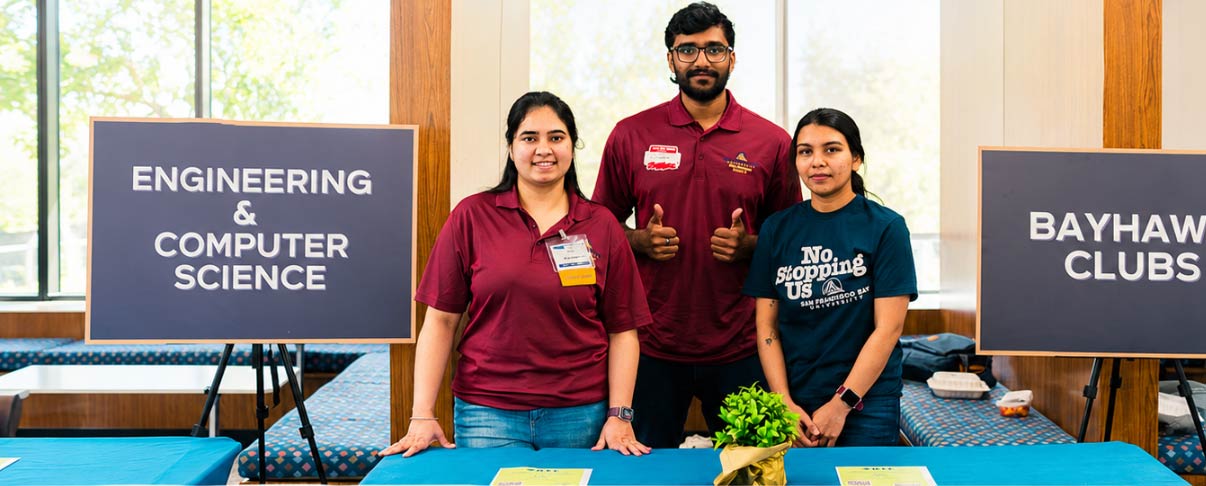
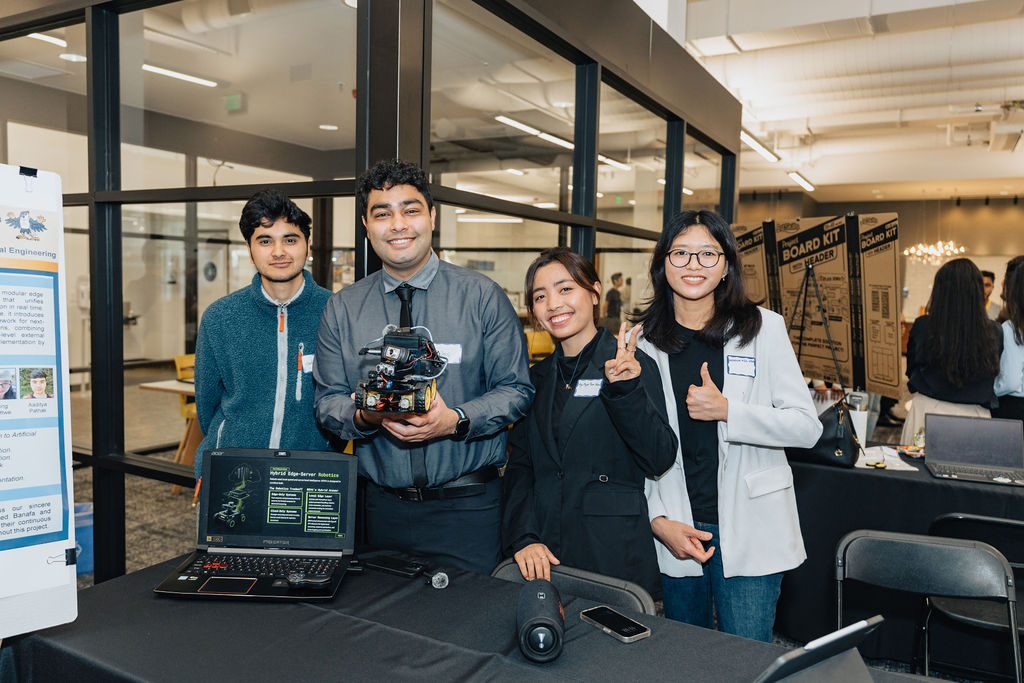
happy students at fremont tech week

FREMONT, Calif.— Less than a year after launching, the Innovate Bay startup incubator brought together civic leaders, inventors, investors, and students for the inaugural Fremont Tech Week.

The four-day public conference concluded April 30 after spotlighting advanced manufacturing, workforce development and entrepreneurship driving momentum in Fremont. In-person and virtual sessions ranged from artificial intelligence in the workplace to emotional intelligence, startup law, and student-led projects and pitches.

San Francisco Bay University started and houses Innovate Bay, the first startup incubator in Fremont. It includes the city’s first recognized coworking space.

“Fremont Tech Week reflects the rapid growth and early successes of Innovate Bay, which is fueling opportunities in entrepreneurship and practical innovation,” SFBU President Nick Ladany said. “As an introduction to the university, this flagship event strengthens SFBU’s relationships in the tech, Fremont, and entrepreneurial communities while connecting our students and external partners. It’s a model of our disruptor approach in higher education.”

The conference provides a platform for SFBU to give back to Fremont and “foster an exchange of knowledge that we all need right now,” Ladany added. The gathering, which organizers plan to hold annually, is among several Innovate Bay events designed to spur involvement. SFBU held its spring open house and Academia Day on April 28 as part of tech week.

“Fremont may have a lower profile than some peers in and around the East Bay,” said Rohan Brown, the Innovate Bay managing director and founder. “But the innovation ecosystem here is critical to California’s economy and future, and far beyond.”

“Together with SFBU, we’re creating a Silicon Valley innovation pipeline in Fremont and establishing Fremont Tech Week as a premier benchmark for community, student, and industry engagement,” Brown said.

Prospective students and their families experienced tech week as a hands-on example of SFBU culture. During the open house, they toured campus, learned about the admissions process and scholarships, and met with enrollment counselors, faculty and current students.

Visitors ready to take the next step applied on the spot and had transcripts reviewed immediately. Academia Day likewise saw a boost from its timing during tech week, bringing together capstone presentations by graduating seniors and a career fair.

“Future Bayhawks didn’t just hear about what is possible here. They saw it happening in real time,” SFBU Provost Brad Fuster said. “Bringing together tech week, our spring open house, and Academia Day immersed future students in a fully activated university environment. No brochure can replicate that.” 

Academia Day also featured a pitch session by SFBU’s Startup Scholars, a group of first-generation college students supported by the university. An unscripted illustration of SFBU was key, said university Vice President of Enrollment Management Reeshemah Thornton.

“We wanted future students to feel it — the energy, the people, the possibilities,” Thornton said. “Our students are the heart of everything we do, and bringing future Bayhawks into that world for a day and letting them see and be part of it — that is the SFBU difference.”

Later in Tech Week, attendees heard from Innovate Bay’s first class of five startup companies: Immergo LabsSpaceTime RoboticsMindmunchQuiche Inc.; and VIPTwin. Other speakers and panelists included Fremont Vice Mayor Yajing Zhang, California Deputy Treasurer Khaim Morton, and state Sen. Aisha Wahab.

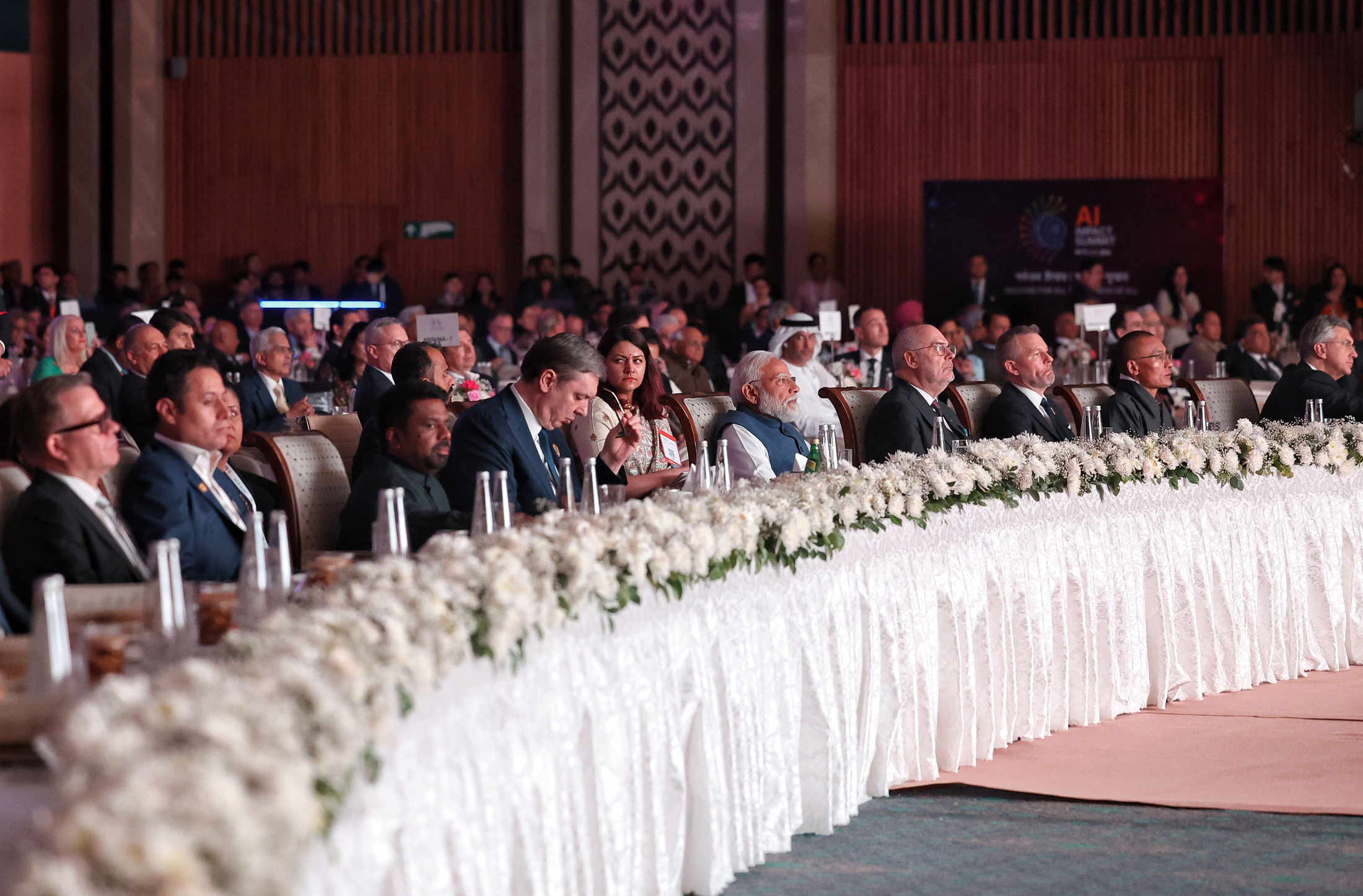
India AI Impact Summit 2026 Concludes in New Delhi — With SFBU’s Shalini Gopalkrishnan Part of the Global AI Conversation

As the India AI Impact Summit 2026 concludes today in New Delhi, it marks the end of a landmark global gathering that brought together heads of state, CEOs of major technology companies, leading AI researchers, and policymakers from around the world. Among those participating in discussions connected to the Summit was SFBU’s Dr. Shalini Gopalkrishnan, who took part in a pre-Summit Inclusive AI roundtable at the Indian Consulate.

Her participation reflects a pivotal moment when AI is no longer a niche technology issue but a central economic and policy priority worldwide.

Organized under the Government of India’s IndiaAI Mission, the India AI Impact Summit 2026 was led by the Ministry of Electronics and Information Technology (MeitY). The event is positioned as one of the largest global AI gatherings to date, bringing together representatives from more than 100 countries across government, industry, academia, startups, and civil society.

The Summit’s Focus: From Vision to Implementation

With its theme — “People, Planet, and Progress” — the Summit emphasized moving AI discussions from theory to real-world implementation. The focus remained on leveraging AI for public good, sustainable development, and inclusive economic growth.

The official program centered on key priorities including safe and trusted AI, democratizing access to AI resources, building AI talent and skills, advancing research and innovation, and applying AI for measurable social impact.

India’s approach framed AI as both an opportunity and a responsibility — encouraging rapid innovation alongside governance, transparency, and accountability.

 A Global Lineup of Leaders

The Summit’s global significance was reflected in its speaker lineup. India’s Prime Minister Narendra Modi delivered the inaugural address, underscoring the country’s intent to help shape global AI policy and development.

Technology leaders participating included:

  • Sundar Pichai, CEO of Google and Alphabet
  • Sam Altman, CEO of OpenAI
  • Jensen Huang, CEO of NVIDIA
  • Demis Hassabis, CEO of Google DeepMind
  • Dario Amodei, CEO of Anthropic
  • Bill Gates, Co-chair of the Bill & Melinda Gates Foundation
  • Brad Smith, President of Microsoft
  • Shantanu Narayen, CEO of Adobe
  • AI research leaders such as Yann LeCun

The presence of political leadership alongside frontier AI executives highlighted the Summit’s role as a platform where policy, research, and commercial AI development intersect.

Five Days of Global Collaboration

Over five days, the Summit featured plenary sessions, policy dialogues, research showcases, startup exhibitions, and international collaboration forums. Discussions explored AI applications across healthcare, education, agriculture, climate resilience, financial inclusion, and public services.

There was a strong focus on workforce development, cross-border research collaboration, ethical standards, infrastructure access, and startup ecosystem growth.

By hosting the event at this scale, India further positioned itself as both a major AI market and an active contributor to shaping global AI standards.

Inclusive AI at the Forefront

Ahead of the main Summit sessions, an Inclusive AI roundtable at the Indian Consulate brought together women leaders from global technology companies, startups, investors, industry organizations, and nonprofits. The discussion centered on ensuring that AI development reflects diverse leadership and equitable access.

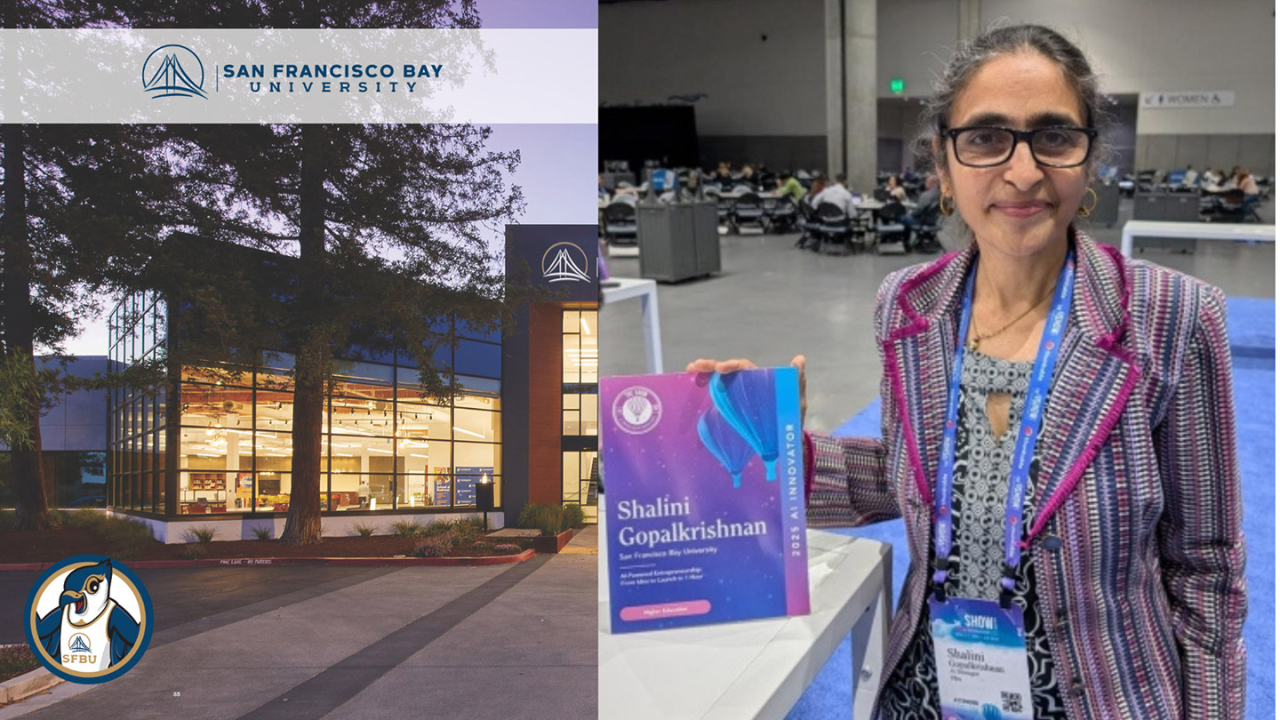
Shalini Gopalkrishnan, SFBU Faculty Member

It was in this setting that SFBU’s Shalini Gopalkrishnan, DBA, joined conversations on responsible AI deployment, business transformation, and inclusive innovation.

The focus on inclusion is closely aligned with the Summit’s broader objective: ensuring AI benefits emerging markets, small businesses, and underserved communities — not only large enterprises or advanced economies.

A Defining Moment for Global AI

As the India AI Impact Summit 2026 comes to a close, it underscores a defining reality: AI now plays a central role in economic strategy, digital infrastructure, workforce transformation, and global competitiveness

By convening heads of state and leaders from Google, OpenAI, NVIDIA, DeepMind, Anthropic, Adobe, Microsoft, and beyond, the Summit reinforced that the future of AI will be shaped through coordinated global dialogue

And as those conversations conclude in New Delhi, participants — including SFBU’s Shalini Gopalkrishnan — have contributed to a broader, ongoing discussion about how AI should be developed, governed, and deployed in the years ahead.


Contact: pr@sfbu.edu

Council of Graduate Schools (CGS) Webinar Highlights SFBU’s Graduate Education Model

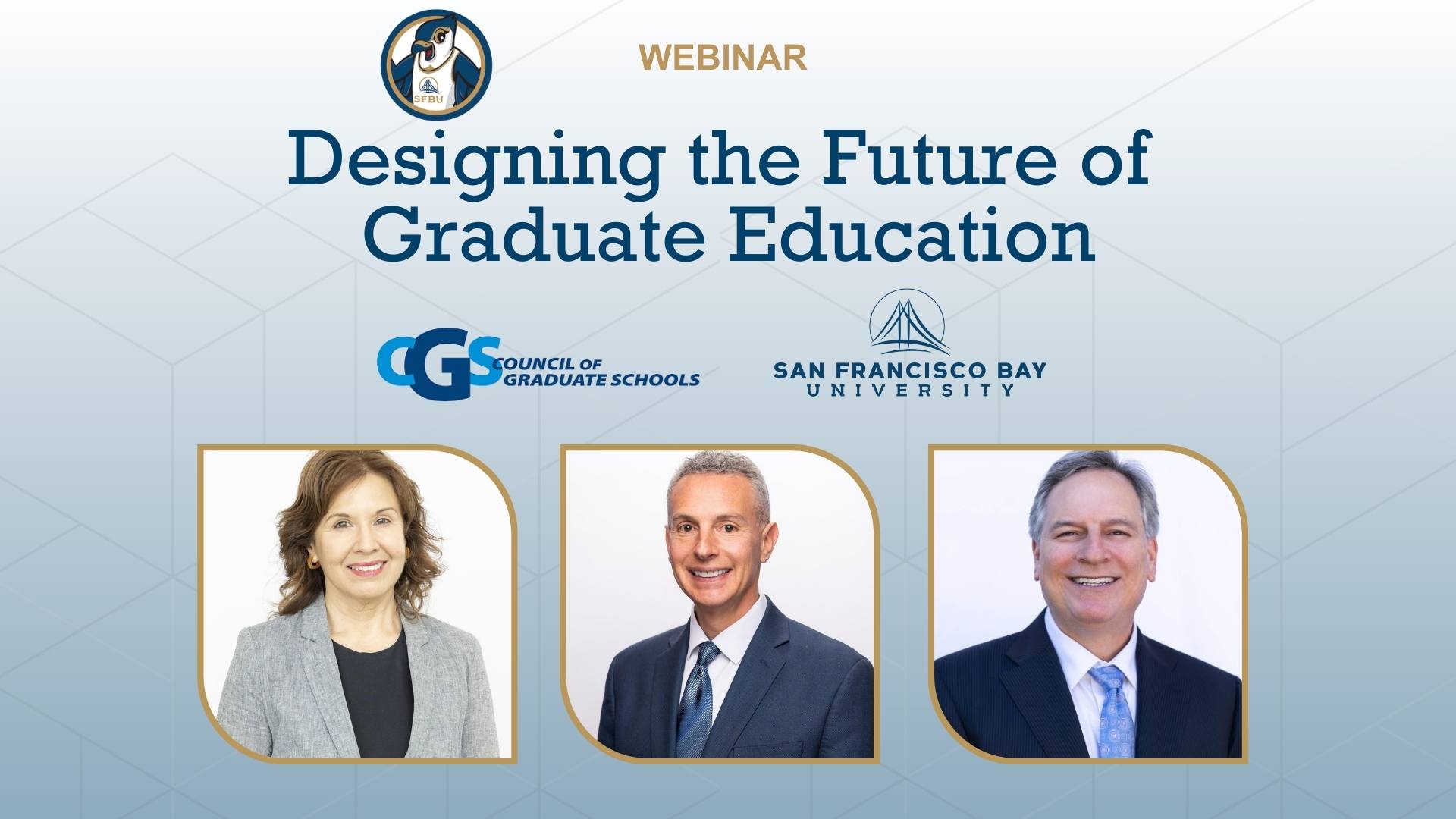
Fremont, CA — February 2026 — San Francisco Bay University (SFBU) was recently featured in a national webinar hosted by the Council of Graduate Schools (CGS), a leading organization dedicated to advancing graduate education and research. The session focused on innovation in graduate education and explored how institutions can move beyond traditional program development to build integrated systems centered on student access, persistence, and meaningful learning outcomes.

View webinar here

SFBU leaders — President Dr. Nick Ladany, Provost and Vice President for Academic and Student Affairs Dr. Brad Fuster, and Vice President for Strategy and Innovation Heather Herrera — were featured speakers in the session.

Moderated by Jamal Gay, Senior Vice President of University Partnerships at Noodle, the conversation examined how redesigning institutional foundations — rather than launching isolated programs — can create scalable, future-ready graduate education models that expand access and improve student outcomes.

During the webinar, SFBU leaders outline key elements of the university’s institutional redesign:

  • Student-first design: Programs and systems built around access, learning, and measurable outcomes.
  • Institutional alignment: Leadership, governance, academic strategy, and operations working in sync to support innovation.
  • Equity and persistence: Embedded support structures that strengthen retention and close opportunity gaps.
  • Data-informed decision-making: Analytics guiding continuous improvement and program development.
  • Technology and AI integration: Emerging tools used to personalize learning and expand access.
  • Sustainable growth: Graduate programs designed for long-term impact, not short-term enrollment gains.

At the core of SFBU’s approach is a clear principle: design the institution around student access, learning, and success. 

Rather than building programs in isolation, the university has reexamined long-standing assumptions about governance, delivery models, and academic structure. The result is a cohesive framework built for equity, scalability, and long-term sustainability.

One early example is SFBU’s forthcoming MBA program, the first of several graduate offerings being developed within this flexible, student-centered model.

“We are honored to share SFBU’s institutional transformation with colleagues across the graduate education community,” said Dr. Nick Ladany, President of San Francisco Bay University. “By aligning our systems and strategy around student success from the ground up, we are building graduate programs designed for impact, equity, and sustainability.”

The webinar reinforces a central message: meaningful innovation requires more than new programs. It requires alignment across leadership, governance, and operations. As graduate education continues to evolve, institutions that intentionally design for access, quality, and measurable outcomes will be best positioned to serve today’s learners.

For more information about SFBU’s graduate programs and institutional initiatives, visit sfbu.edu. For information about upcoming CGS events, visit cgsnet.org.

Contact: pr@sfbu.edu

SFBU Faculty Member Appointed to United Nations Digital Development Goals Committee

FREMONT, California — San Francisco Bay University announced today that Shalini Gopalkrishnan, DBA, an AI strategist at SFBU, has been appointed to the United Nations Working Group 6 on Digital Development Goals for Cities, joining a global cohort of more than 120 experts.

The working group operates under the United for Smart Sustainable Cities (U4SSC) initiative and is developing the world’s first Digital Development Goals framework for cities. Scheduled for release in November 2026, the framework will establish standards to help cities use digital technologies to advance the United Nations Sustainable Development Goals while emphasizing equity, ethical governance and citizen-centered design.

This work is about ensuring digital transformation serves people first,” Dr. Gopalkrishnan said. “Cities have a responsibility to use technology in ways that are inclusive, ethical and impactful.”

Dr. Gopalkrishnan is a serial entrepreneur, academician and researcher. She is the founder of Metaverse University, FreelanceMoms, Lexion Data Analytics and Introspect, and has taught learners from kindergarten through doctoral programs. Her research focuses on technology for social good, analytics, ESG, the Sustainable Development Goals and social entrepreneurship.

The initiative formally convened in November 2025, marking a shift toward human-centered digital transformation for cities worldwide.

The appointment underscores San Francisco Bay University’s growing role in global conversations shaping smart, sustainable and equitable cities.

About San Francisco Bay University
San Francisco Bay University is a Fremont-based institution committed to academic excellence, innovation and global engagement.

Contact: pr@sfbu.edu