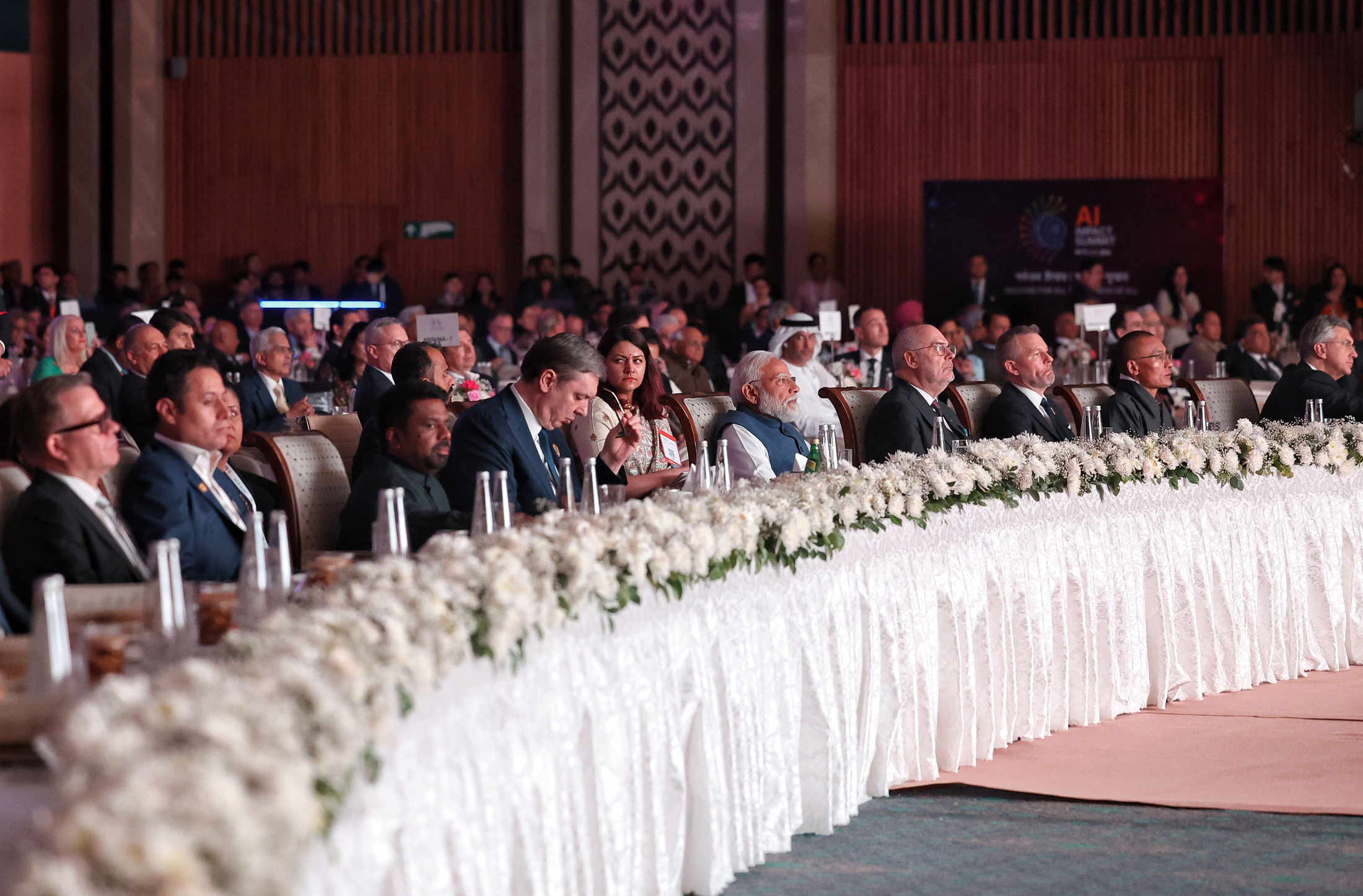
"Prime Minister Narendra Modi inaugurates the India AI Impact Summit 2026 at Bharat Mandapam, New Delhi. The summit focuses on a 'human-centric' approach to artificial intelligence under the theme People, Planet, and Progress. (Photo: PIB India)"

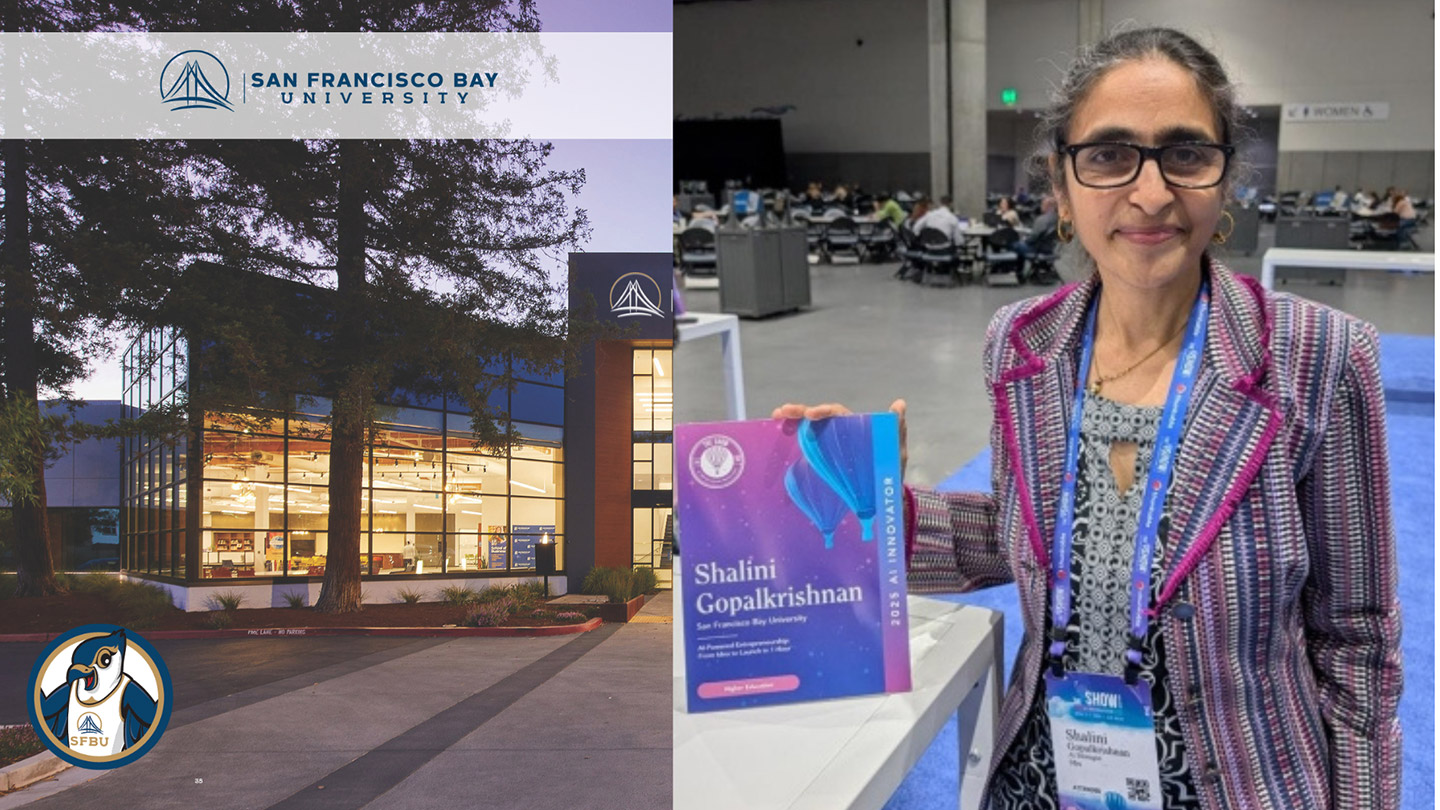
As the India AI Impact Summit 2026 concludes today in New Delhi, it marks the end of a landmark global gathering that brought together heads of state, CEOs of major technology companies, leading AI researchers, and policymakers from around the world. Among those participating in discussions connected to the Summit was SFBU’s Dr. Shalini Gopalkrishnan, who took part in a pre-Summit Inclusive AI roundtable at the Indian Consulate.

Her participation reflects a pivotal moment when AI is no longer a niche technology issue but a central economic and policy priority worldwide.

Organized under the Government of India’s IndiaAI Mission, the India AI Impact Summit 2026 was led by the Ministry of Electronics and Information Technology (MeitY). The event is positioned as one of the largest global AI gatherings to date, bringing together representatives from more than 100 countries across government, industry, academia, startups, and civil society.

The Summit’s Focus: From Vision to Implementation

With its theme — “People, Planet, and Progress” — the Summit emphasized moving AI discussions from theory to real-world implementation. The focus remained on leveraging AI for public good, sustainable development, and inclusive economic growth.

The official program centered on key priorities including safe and trusted AI, democratizing access to AI resources, building AI talent and skills, advancing research and innovation, and applying AI for measurable social impact.

India’s approach framed AI as both an opportunity and a responsibility — encouraging rapid innovation alongside governance, transparency, and accountability.

 A Global Lineup of Leaders

The Summit’s global significance was reflected in its speaker lineup. India’s Prime Minister Narendra Modi delivered the inaugural address, underscoring the country’s intent to help shape global AI policy and development.

Technology leaders participating included:

  • Sundar Pichai, CEO of Google and Alphabet
  • Sam Altman, CEO of OpenAI
  • Jensen Huang, CEO of NVIDIA
  • Demis Hassabis, CEO of Google DeepMind
  • Dario Amodei, CEO of Anthropic
  • Bill Gates, Co-chair of the Bill & Melinda Gates Foundation
  • Brad Smith, President of Microsoft
  • Shantanu Narayen, CEO of Adobe
  • AI research leaders such as Yann LeCun

The presence of political leadership alongside frontier AI executives highlighted the Summit’s role as a platform where policy, research, and commercial AI development intersect.

Five Days of Global Collaboration

Over five days, the Summit featured plenary sessions, policy dialogues, research showcases, startup exhibitions, and international collaboration forums. Discussions explored AI applications across healthcare, education, agriculture, climate resilience, financial inclusion, and public services.

There was a strong focus on workforce development, cross-border research collaboration, ethical standards, infrastructure access, and startup ecosystem growth.

By hosting the event at this scale, India further positioned itself as both a major AI market and an active contributor to shaping global AI standards.

Inclusive AI at the Forefront

Ahead of the main Summit sessions, an Inclusive AI roundtable at the Indian Consulate brought together women leaders from global technology companies, startups, investors, industry organizations, and nonprofits. The discussion centered on ensuring that AI development reflects diverse leadership and equitable access.

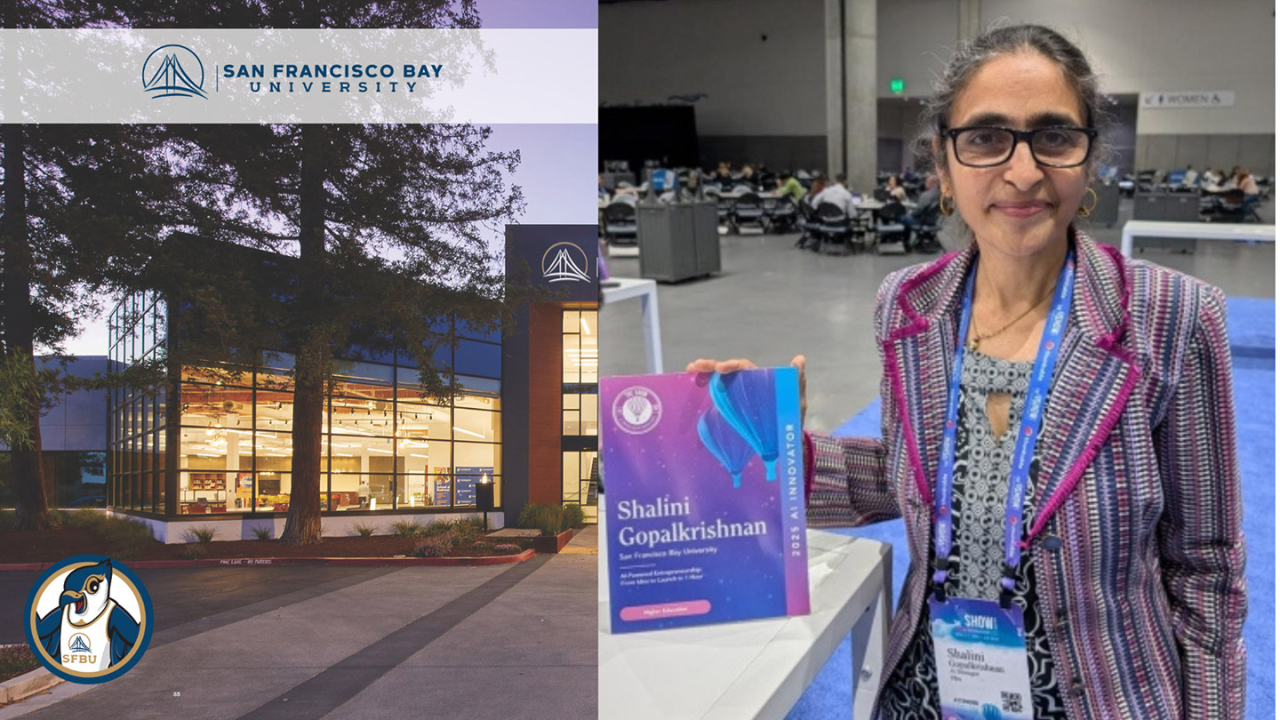
Shalini Gopalkrishnan, SFBU Faculty Member

It was in this setting that SFBU’s Shalini Gopalkrishnan, DBA, joined conversations on responsible AI deployment, business transformation, and inclusive innovation.

The focus on inclusion is closely aligned with the Summit’s broader objective: ensuring AI benefits emerging markets, small businesses, and underserved communities — not only large enterprises or advanced economies.

A Defining Moment for Global AI

As the India AI Impact Summit 2026 comes to a close, it underscores a defining reality: AI now plays a central role in economic strategy, digital infrastructure, workforce transformation, and global competitiveness

By convening heads of state and leaders from Google, OpenAI, NVIDIA, DeepMind, Anthropic, Adobe, Microsoft, and beyond, the Summit reinforced that the future of AI will be shaped through coordinated global dialogue

And as those conversations conclude in New Delhi, participants — including SFBU’s Shalini Gopalkrishnan — have contributed to a broader, ongoing discussion about how AI should be developed, governed, and deployed in the years ahead.


Contact: pr@sfbu.edu

Council of Graduate Schools (CGS) Webinar Highlights SFBU’s Graduate Education Model

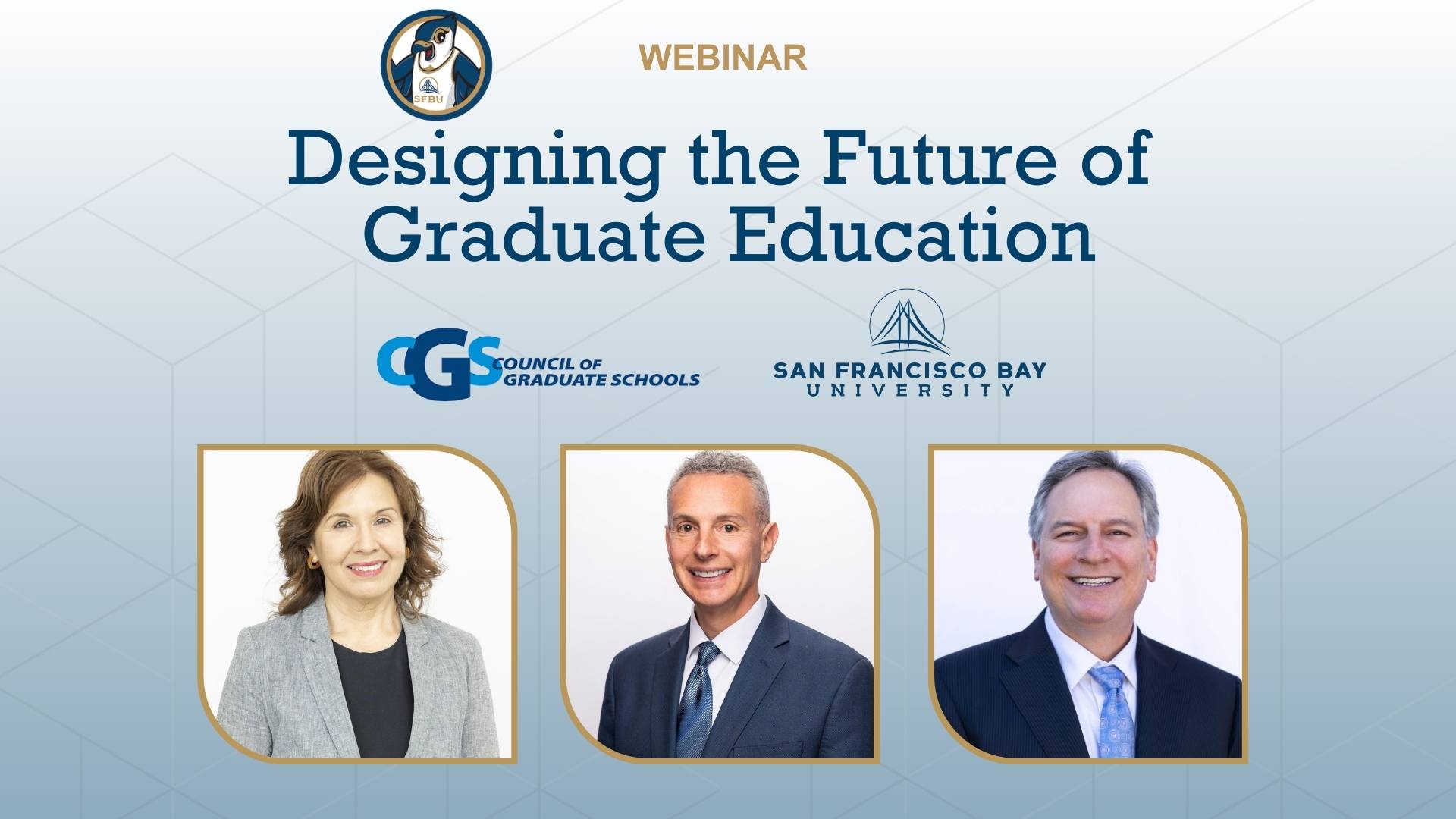
Fremont, CA — February 2026 — San Francisco Bay University (SFBU) was recently featured in a national webinar hosted by the Council of Graduate Schools (CGS), a leading organization dedicated to advancing graduate education and research. The session focused on innovation in graduate education and explored how institutions can move beyond traditional program development to build integrated systems centered on student access, persistence, and meaningful learning outcomes.

View webinar here

SFBU leaders — President Dr. Nick Ladany, Provost and Vice President for Academic and Student Affairs Dr. Brad Fuster, and Vice President for Strategy and Innovation Heather Herrera — were featured speakers in the session.

Moderated by Jamal Gay, Senior Vice President of University Partnerships at Noodle, the conversation examined how redesigning institutional foundations — rather than launching isolated programs — can create scalable, future-ready graduate education models that expand access and improve student outcomes.

During the webinar, SFBU leaders outline key elements of the university’s institutional redesign:

  • Student-first design: Programs and systems built around access, learning, and measurable outcomes.
  • Institutional alignment: Leadership, governance, academic strategy, and operations working in sync to support innovation.
  • Equity and persistence: Embedded support structures that strengthen retention and close opportunity gaps.
  • Data-informed decision-making: Analytics guiding continuous improvement and program development.
  • Technology and AI integration: Emerging tools used to personalize learning and expand access.
  • Sustainable growth: Graduate programs designed for long-term impact, not short-term enrollment gains.

At the core of SFBU’s approach is a clear principle: design the institution around student access, learning, and success. 

Rather than building programs in isolation, the university has reexamined long-standing assumptions about governance, delivery models, and academic structure. The result is a cohesive framework built for equity, scalability, and long-term sustainability.

One early example is SFBU’s forthcoming MBA program, the first of several graduate offerings being developed within this flexible, student-centered model.

“We are honored to share SFBU’s institutional transformation with colleagues across the graduate education community,” said Dr. Nick Ladany, President of San Francisco Bay University. “By aligning our systems and strategy around student success from the ground up, we are building graduate programs designed for impact, equity, and sustainability.”

The webinar reinforces a central message: meaningful innovation requires more than new programs. It requires alignment across leadership, governance, and operations. As graduate education continues to evolve, institutions that intentionally design for access, quality, and measurable outcomes will be best positioned to serve today’s learners.

For more information about SFBU’s graduate programs and institutional initiatives, visit sfbu.edu. For information about upcoming CGS events, visit cgsnet.org.

Contact: pr@sfbu.edu

SFBU Faculty Member Appointed to United Nations Digital Development Goals Committee

FREMONT, California — San Francisco Bay University announced today that Shalini Gopalkrishnan, DBA, an AI strategist at SFBU, has been appointed to the United Nations Working Group 6 on Digital Development Goals for Cities, joining a global cohort of more than 120 experts.

The working group operates under the United for Smart Sustainable Cities (U4SSC) initiative and is developing the world’s first Digital Development Goals framework for cities. Scheduled for release in November 2026, the framework will establish standards to help cities use digital technologies to advance the United Nations Sustainable Development Goals while emphasizing equity, ethical governance and citizen-centered design.

This work is about ensuring digital transformation serves people first,” Dr. Gopalkrishnan said. “Cities have a responsibility to use technology in ways that are inclusive, ethical and impactful.”

Dr. Gopalkrishnan is a serial entrepreneur, academician and researcher. She is the founder of Metaverse University, FreelanceMoms, Lexion Data Analytics and Introspect, and has taught learners from kindergarten through doctoral programs. Her research focuses on technology for social good, analytics, ESG, the Sustainable Development Goals and social entrepreneurship.

The initiative formally convened in November 2025, marking a shift toward human-centered digital transformation for cities worldwide.

The appointment underscores San Francisco Bay University’s growing role in global conversations shaping smart, sustainable and equitable cities.

About San Francisco Bay University
San Francisco Bay University is a Fremont-based institution committed to academic excellence, innovation and global engagement.

Contact: pr@sfbu.edu

San Francisco Bay University and University of World Economy and Diplomacy Sign Memorandum of Understanding

Fremont, California, USA / Tashkent, Uzbekistan — San Francisco Bay University (SFBU) and the University of World Economy and Diplomacy (UWED) have signed a Memorandum of Understanding (MOU) on January 12, 2026, establishing a framework for academic cooperation and international partnership.

The five-year agreement reflects both institutions’ shared commitment to expanding educational opportunities, advancing academic research, and strengthening global engagement.

“This memorandum of understanding establishes a strong foundation for academic collaboration and global engagement. Through our partnership with the University of World Economy and Diplomacy, San Francisco Bay University is expanding opportunities for student exchange, faculty collaboration, and shared scholarship that advance our international mission.”

— Nick Ladany, President, San Francisco Bay University

Under the MOU, the two universities intend to collaborate in areas that may include:

  • Exchange of undergraduate and graduate students
  • Exchange of faculty, researchers, and administrative staff
  • Joint research and educational initiatives
  • Sharing of academic information and educational resources
  • Cooperation in seminars, conferences, and academic meetings
  • Other mutually beneficial academic and institutional activities

The partnership is designed to foster cross-cultural academic exchange and promote institutional development at both universities. Specific programs and financial arrangements will be defined through future agreements developed by mutual consent.

We highly value our partnership with San Francisco Bay University and view this MoU as the beginning of a long-term and mutually beneficial collaboration in higher education and research.

— Muzaffar Djalalov, Vice-rector for digital transformation and economic affairs, University of World Economy and Diplomacy

This collaboration upnderscores SFBU’s and UWED’s commitment to advancing higher education through meaningful international partnerships.

About San Francisco Bay University

San Francisco Bay University is located in Fremont, California, and is dedicated to providing innovative, career-focused education in a global learning environment.

About the University of World Economy and Diplomacy

The University of World Economy and Diplomacy, based in Tashkent, Uzbekistan, is a leading institution specializing in international relations, economics, and diplomacy

Council of Graduate Schools to Host Featured Webinar with San Francisco Bay University on Building Institutional Foundations for Sustainable Growth

Fremont, California – Jan, 26 2026 – The Council of Graduate Schools (CGS), the national leader in advancing graduate education and research, will host an interactive webinar on February 3, 2026, featuring leadership from San Francisco Bay University (SFBU) and focused on how graduate institutions can build student-centered foundations for sustainable growth. The session will take place from 3:00–4:00 PM ET and bring together academic leaders to examine how intentional institutional design can better serve today’s learners while supporting long-term scalability.

The webinar explores how a student-first, human-centered pedagogical approach can reshape how institutions are designed, governed, and delivered. Hosted at cgsnet.org, CGS webinars provide members with an interactive environment to engage with critical issues in graduate education and research, offering a forum for deans and administrators to learn from and exchange innovative best practices.

The SFBU Framework for Innovation

SFBU’s approach centers on rethinking how institutions are built—starting with a cohesive foundation rather than isolated program launches. By prioritizing equity, student persistence, and meaningful outcomes, SFBU aligns academic rigor with emerging technologies, including artificial intelligence, to expand access and support continuous improvement.

Participants will gain insight into how this framework is being applied through SFBU’s forthcoming MBA program, the first of several offerings developed within this flexible, student-centered model.

Featured Speakers & Moderator

The webinar features leaders at the intersection of institutional strategy, innovation, and student success:

  • Moderator: Jamal Gay, Senior Vice President of University Partnerships, Noodle

  • Speaker: Nick Ladany, Ph.D., President, San Francisco Bay University

  • Speaker: Brad Fuster, DMA, Provost and Vice President for Academic and Student Affairs, SFBU

  • Speaker: Heather Herrera, Ph.D., Vice President for Strategy and Innovation, SFBU

Event Information

Designing the Future of Graduate Education | Building the Institutional Foundation for Sustainable Growth

  • Date: February 3, 2026
  • Time: 3:00–4:00 PM ET
  • Registration: Available via the CGS Webinar Portal at cgsnet.org

About the Council of Graduate Schools (CGS)

The Council of Graduate Schools is a non-profit higher education organization that provides graduate deans and their institutions with data, insights, and advocacy. CGS webinars offer members an interactive environment to address the most pressing issues in graduate education and research.

About San Francisco Bay University (SFBU)

Located in Silicon Valley, San Francisco Bay University is a non-profit institution dedicated to providing accessible, career-aligned education. By blending technology with human-centered pedagogy, SFBU prepares students to lead in a rapidly changing global economy.

We are Proud to Announce: SFBU Provost Brad Fuster Appointed to National CIC Task Force

FREMONT, Calif. — January 21, 2026 — At San Francisco Bay University (SFBU), we are dedicated to staying at the forefront of academic excellence and innovation. Today, we are thrilled to share that our Provost and Vice President for Academic and Student Affairs, Dr. Brad Fuster, has been appointed to the Council of Independent Colleges (CIC) Chief Academic Officers Task Force.

Driving Innovation at SFBU

Since joining our team in June 2024, Dr. Fuster has been a driving force in advancing our academic vision. He has been instrumental in expanding our program offerings and deepening faculty engagement. His leadership continues to be critical as we develop our innovative curriculum—one that seamlessly integrates career mobility, life literacy, wellness, and cutting-edge, AI-driven education.

A Leading Voice in Education

Beyond his work here on campus, Dr. Fuster is also amplifying important voices in our field as the host of The EdUp Innovation Podcast. As part of the EdUp Experience network, he explores the bold ideas and courageous leadership necessary to navigate the complexities of higher education—from AI and digital transformation to workforce alignment.

We are proud to see our leadership represented within the CIC, the leading national association for over 700 small and mid-sized independent colleges and universities.

About San Francisco Bay University

We are a WASC/WSCUC-accredited, private nonprofit university located in the heart of Silicon Valley. At SFBU, our mission is to provide accessible, career-focused education through undergraduate and graduate programs in business, computer science, engineering, and psychology. We believe in empowering our students through cutting-edge technology and personalized support to ensure they thrive in a rapidly changing world.

Contact: pr@sfbu.edu

San Francisco Bay University Launches ChatGPT Edu to Advance AI-Enabled Student Learning

Fremont, Calif. — Jan, 21 2026 — San Francisco Bay University (SFBU) today announced the launch of ChatGPT Edu, a secure, education-focused AI platform designed to support student learning, research, and creativity across the university. The initiative represents a significant step in SFBU’s commitment to innovation, digital fluency, and preparing students to thrive in an AI-enabled world.

ChatGPT Edu provides SFBU students with access to advanced AI capabilities—including the latest OpenAI models, data analysis, search, multimodal tools, and AI-powered image generation—within a university-managed environment aligned with academic standards and data privacy requirements.

“As AI becomes increasingly central to how knowledge is created and applied, universities have a responsibility to integrate these tools thoughtfully and responsibly,” said Brad Fuster, Provost and Vice President of Academic & Student Affairs at SFBU.

The launch of ChatGPT Edu reflects SFBU’s belief that access to emerging technologies must be paired with clear academic guidance and responsible use. The platform enables students to enhance coursework, deepen research, and explore new modes of creativity while remaining grounded in institutional expectations for academic integrity.

“ChatGPT Edu empowers our students to enhance their learning, deepen their research, and explore new ways of thinking—while remaining grounded in academic integrity and institutional guidelines,” Fuster added.

Through ChatGPT Edu, students can:

  • Support coursework and research through AI-assisted analysis, writing, coding, and problem-solving
  • Brainstorm ideas and collaborate using Canvas and Custom GPTs tailored to specific academic needs
  • Create AI-generated visuals for presentations and academic projects
  • Engage with multimodal tools using text, voice, and images

Use of ChatGPT Edu is governed by SFBU’s AI policy, as outlined in the University Catalog. Students are encouraged to use the university-provided platform for all academic work rather than personal AI accounts, ensuring stronger privacy protections and alignment with academic standards.

To support adoption and effective use, SFBU is providing onboarding resources, sample prompts, recorded webinars, and technical assistance through the university’s AskIT services.

“The goal is not simply access to technology,” said Fuster. “It’s helping students build the skills, judgment, and confidence to use AI as a tool for learning, creativity, and lifelong success.”

The launch of ChatGPT Edu aligns with SFBU’s broader mission to expand access to innovative, future-ready learning experiences that prepare students for a rapidly evolving global workforce.

For more information about SFBU’s approach to AI in education, visit www.sfbu.edu.

Contact: pr@sfbu.edu

San Francisco Bay University and Nexford University Launch Global Partnership to Expand Access, Innovation, and International Learning Pathways

Fremont, Calif. — January 7, 2026 — San Francisco Bay University (SFBU) has announced a new strategic global partnership with Nexford University (NXU), designed to expand affordable academic access, strengthen faculty innovation, and accelerate cross-border learning through digital-first education models. This partnership advances SFBU’s mission to provide inclusive, innovative, and globally connected higher education opportunities.

The multi-year agreement connects two mission-aligned institutions committed to broadening access to high-quality higher education and preparing learners for success in an increasingly interconnected world. Together, SFBU and Nexford will develop co-learning opportunities, research collaborations, and flexible international pathways that empower students with industry-relevant skills and global perspectives.

“This partnership reimagines what accessible, globally connected education can look like,” said Dr. Nicholas Ladany, President of San Francisco Bay University. “By combining SFBU’s commitment to inclusive excellence with Nexford’s digital innovation, we are creating pathways that prepare learners—not just for today’s workforce, but for tomorrow’s world.”

“Together, we’re expanding what is possible for learners around the world,” said Dr. Ann Larson, Chief Academic Officer at Nexford University. “Our institutions share a belief that high-quality education should be flexible, affordable, and globally relevant. This collaboration brings that mission to life and opens new avenues for innovation in teaching, learning, and global engagement.”

Key Areas of Collaboration

  • Global Academic Access: Develop joint online modules, pathways, and exchange programs that enhance mobility and career readiness.

  • Faculty Innovation: Build shared communities of practice focused on pedagogy, research collaboration, and mentorship.

  • Digital Learning Innovation: Host webinars, seminars, and applied research showcasing technology-driven education models.

  • Student Development: Offer programs that foster leadership, intercultural competence, communication skills, and global awareness—directly supporting SFBU’s five core student identities.

The partnership advances SFBU’s institutional goals across inclusive education, teaching excellence, access and affordability, whole-student development, and innovation in technology-enhanced learning.

Reflecting a shared commitment to sustainable, mission-driven growth, SFBU and Nexford  will collaborate under a renewable five-year agreement focused on building scalable, globally relevant educational opportunities. The SFBU × Nexford partnership marks a major step toward a more connected, agile, and globally accessible model of higher education.

Media Contact

SFBU: Irene Valdes  | Chief of Staff and Vice President of Presidential Initiatives and Community Impact  | San Francisco Bay University  | pr@sfbu.edu

Nexford University: Ragen Dodson | Head of Marketing | pr@nexford.edu

About San Francisco Bay University 

San Francisco Bay University (SFBU) is a WASC/WSCUC-accredited, private nonprofit university located in the San Francisco Bay Area/Silicon Valley. Dedicated to providing accessible, high-quality, and career-focused education, SFBU offers undergraduate and graduate programs in business, computer science, and engineering. Founded on the belief that higher education should empower students to achieve personal and professional success, SFBU integrates cutting-edge technology, real-world learning experiences, and personalized support to prepare students for leadership in a rapidly changing world. Learn more at www.sfbu.edu.

About Nexford University

Nexford University (NXU) is an accredited online university built to make higher education more affordable, flexible, and career-relevant for working adults worldwide. NXU offers competency-based programs designed in collaboration with industry to help learners build practical skills and advance professionally—without putting life on pause. Learn more at www.nexford.edu.