Teaching is the whole job at SFBU. Faculty are not asked to balance it against research and service. Developing as a teacher is part of every faculty member’s relationship with the university, and CEPI is where that development happens.

How CEPI works

Training in teaching and learning is mandatory at SFBU. It begins at onboarding and continues for as long as a faculty member teaches at SFBU. The field keeps changing, and CEPI revises the frameworks as it does. Every CEPI training is a workshop, so faculty build a practice in the session and apply it in their own course.

The training path has four parts. Every new faculty member trains with CEPI during onboarding. CEPI then meets one-to-one with each faculty member through the first year. In the first semester, faculty begin the CEPI Academy, a set of asynchronous certification courses in CEPI’s core teaching skills. Workshops run year-round, and some of them are required.

The annual Roots & Branches institute brings the whole faculty together, and the Faculty Guidebook is the shared text behind all of it. As faculty try these approaches in their own courses, CEPI gathers what they learn and shapes it into the next revision.

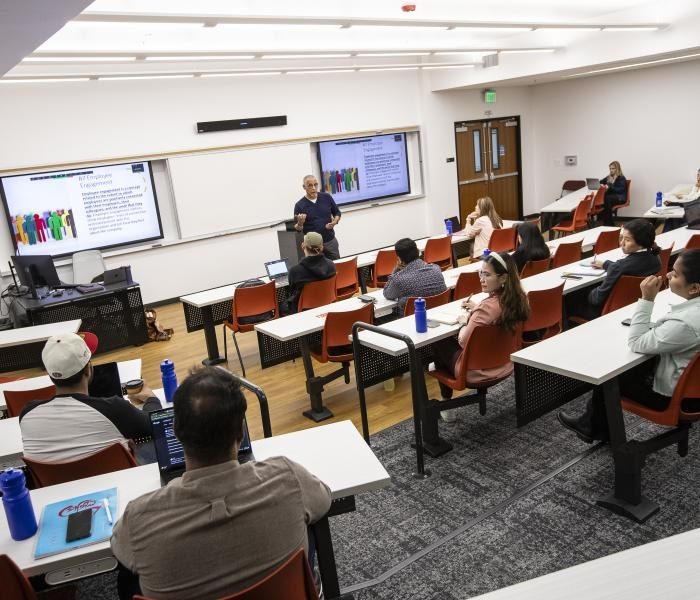
Faculty discussion, Roots & Branches, 2026.

Roots & Branches Faculty Institute

Each year, faculty from every school spend three days in one room working on their own courses with the CEPI team. Roots & Branches is also open to educators from outside SFBU, who experience the training first-hand.

Faculty training

The training covers SFBU's own frameworks first, then the wider teaching practice they draw on.

PERS Think, Do, Create Teaching with AI Relational Intelligence Transparent assignment design (TILT) Universal Design for Learning Culturally relevant and sustaining teaching Blended learning Trauma-aware teaching Neurodiversity-affirming design Learning how to learn Flipped classroom Building skills step by step

Course design partnership

A consultation usually starts with one assignment or one unit and works outward from whatever stage the course has reached. CEPI then works with the faculty member on how the whole course serves students, from the first assignment to what they carry into work.

A course design consultation in an SFBU classroom.

Student feedback loops

Students are part of CEPI’s work. CEPI gathers student feedback on courses and brings it into course design conversations with faculty. What students say then shapes how a course is taught next time.

Resources

The workshop kits and prompts from Roots & Branches are free to download and use. Weekend Reads from CEPI arrives every other Friday with one idea worth trying, and SFBU faculty can find past editions on the CEPI Canvas hub.