In an SFBU class, students are active for most of the session and expected to contribute. They are known by name, given room to struggle with hard material, and taken seriously when they do.

Faculty design the situations in which that happens. Those include the questions, the tasks, the moments of productive difficulty and the attention to notice what students are doing. Subject expertise makes that design possible, and it shows in how the session is built.

What a session looks like

A class designed this way is recognizable within a few minutes. The instructor speaks in stretches of ten to fifteen minutes to frame a concept. For the rest of the time, students work with ideas. They apply an idea to a real case, argue a position with the person beside them, or test something to find where it fails.

The session tends to open with a question. Participation arrives through several channels, because speaking in front of forty people is only one way into a conversation. Some students write, some answer a poll, and some talk in pairs before an idea reaches the whole room. The instructor knows who is present, uses names, and treats a wrong answer as material to work with. That habit teaches students more about intellectual safety than any statement of policy, and it connects to the conditions described in Trauma-Aware Teaching.
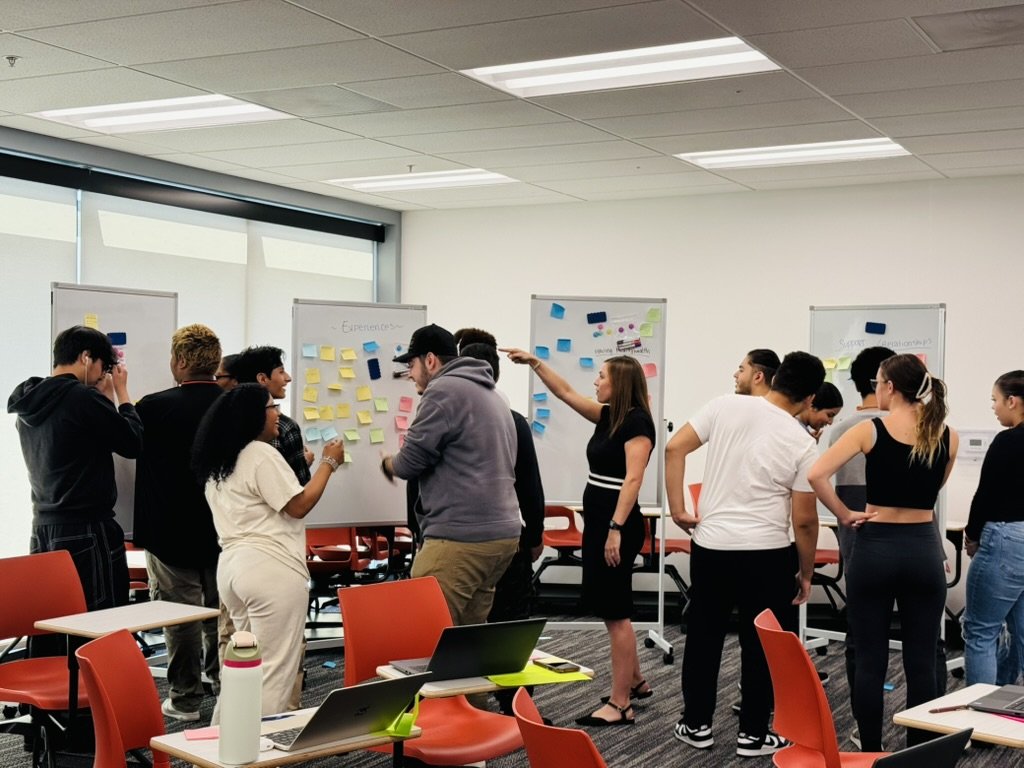
In an SFBU classroom

Several groups at whiteboards, working on the same exercise at the same time. The instructor circulates among the groups.

Active learning session.

The knowledge students bring

Tara Yosso’s Community Cultural Wealth framework (2005) names the knowledge students already carry, in six forms of capital: aspirational, linguistic, familial, social, navigational and resistant. Linguistic capital, for example, is the ability to work in more than one language and cultural setting. SFBU faculty draw on this directly. In an international business course, students are asked what trade friction looks like from inside the countries they come from. Their answers are used alongside the published cases and examined by the stanxxdards of the discipline. The practice belongs to the Personalized dimension of PERS, and Course Design shows where these choices are made.

Take this with you

Three actions for this week

1

Open with a question.

A real procurement failure and the question of what caused it puts students in pursuit of an answer from the first minute. People remember information better when they want to know the answer (Gruber, Gelman and Ranganath, 2014).

2

Speak for ten to fifteen minutes, then hand over.

Frame the concept, then let small groups find it in a real document, case or dataset. In financial accounting, explain the matching principle, then let groups find it in a real income statement.

3

Use think-pair-share before whole-room discussion.

Students think alone, tell one person, then bring the idea to the room. This lowers the cost of a first attempt and widens who speaks, especially for multilingual students.

One question to keep

For most of the next session, what will students be doing?

Download the Faculty Guidebook

The full argument, worked examples and sources. PDF.